[00:00:06] Tamara Dean: Welcome to the Terrain.org podcast Conversations with authors, artists, scientists, and others who share Terrain.org's passion for place and focus on climate, community, and justice. I'm podcast editor Tamara Dean. On today's episode, authors Kerri Schlottman and Caroline Tracey talk about Salt lakes, ecological collapse, environmental justice, and storytelling.
Caroline Tracey's debut, Salt Lakes, published by W.W. Norton in March 2026, has received extraordinary praise, including a review in the New York Times Book Review noting its visceral clarity and geologic intimacy. Her environmental writing for the New Yorker, Guernica, and High Country News makes her a leading literary voice grappling with the transformations of the American Southwest.
Kerri Schlottman's novel Daytime Moon, published by Unnamed Press in May of this year, weaves themes of hydrofeminism, empathy, and collapse into a story about how bodies and communities absorb environmental and emotional depletion and is set at the Salton Sea.
[00:01:21] Kerri Schlottman: Thank you so much to Terrain for hosting this conversation. I'm so excited to be talking with Caroline Tracey, whose book Salt Lakes the Unnatural History came out in March.
I'm Kerri Schlottman. I'm the author of Daytime Moon, which actually debuted on May 12th.
Hi, Caroline.
[00:01:39] Caroline Tracey: Hi. Thank you so much for having me. It's such a pleasure to join you. And I think our books have a lot in common.
[00:01:45] Kerri: Yeah. So Caroline and I were connected over our shared interest in the Salton Sea, which features in both of our books, and we have a lot to say about Salt Lake's borderlands, ecological collapse, and so much more. I was fortunate to get to hear Caroline speak publicly, and I'm so thrilled to kind of dig a little bit more into some of the themes in her book. But maybe we start with that. Caroline, why don't you tell us about your book?
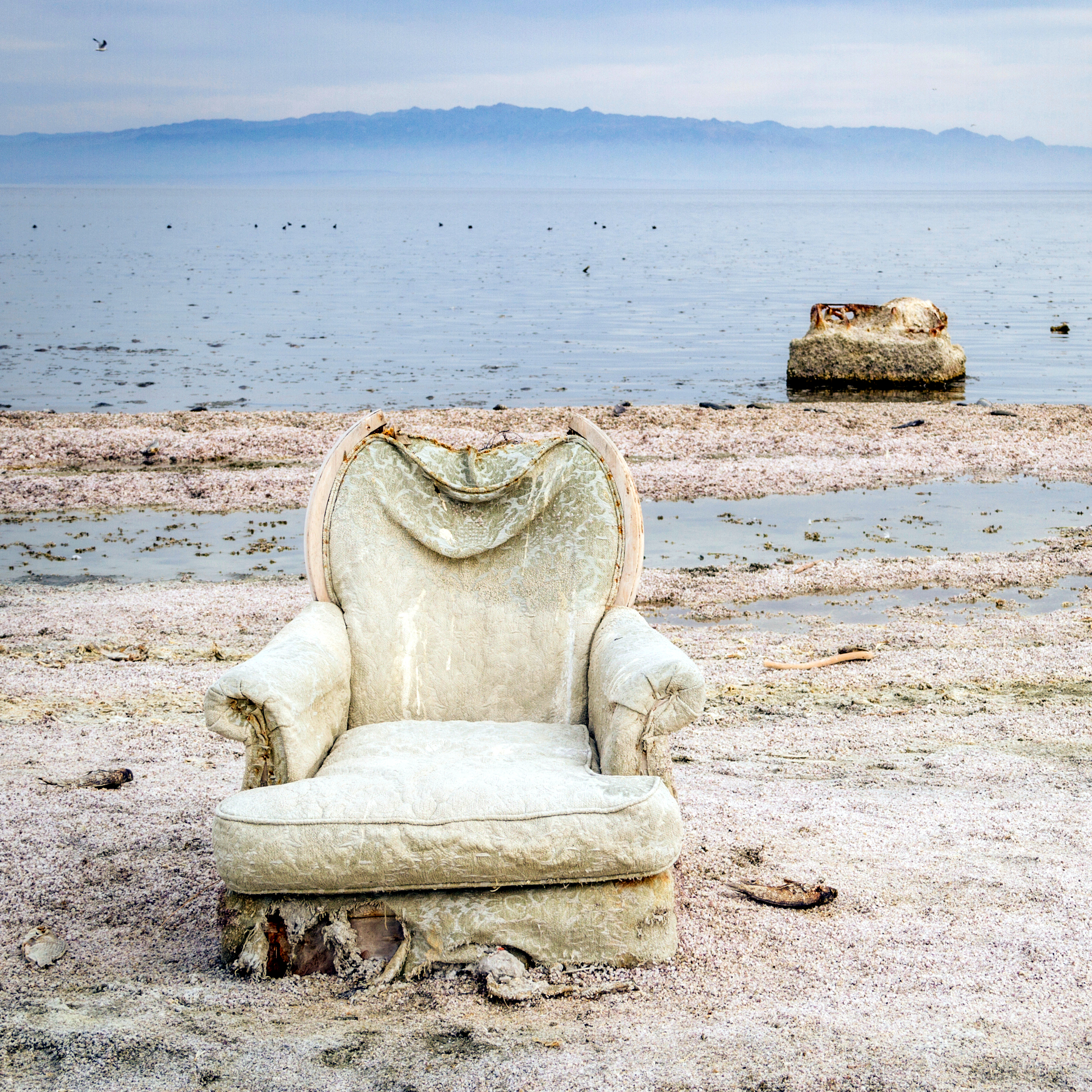
[00:02:11] Caroline: Yeah, I was thinking I really want to ask you about how this sort of Salton Sea origin story. So, I mean, I feel like the intro to my book is basically a Salton Sea origin story, too, because basically my book is called Salt Lakes, and it's a mixture of personal narrative and environmental reporting centering on salt lakes from around the world. But the way that it got started was with a curiosity about the Salton Sea, which is in southeastern California and has this very unusual history, completely different than any other.
Any other salt lake and pretty much any other body of water in the world, or it was created by accident. Essentially, it geologically existed. It would occasionally overflow back when the Colorado River sort of ran freely, but in the early 1900s, they built this irrigation canal that they built it very sloppily and didn't build a head gate. And when the river kind of came in its full force with all the spring runoff, it just completely diverted and filled this. Filled this basin.
And so I had read a few books that mentioned the Salton Sea. One of them was this book, Imperial by William Vollmann. I don't know if you know that book, Kerri, but it's this, like, massive tome. I mean, it's a nonfiction book, but I think it's a tome still. And it talks about all kinds of interesting things. It talks about Mexicali and the Chinese immigration to Mexicali, and it talks about Mexican labor in the Imperial Valley. And then it talks about the Salton Sea. And I was have to go see this place. And so what I didn't realize was it's, you know, sort of captivating, not only for its strangeness, but also for its beauty. And so basically from there, I got really interested in salt lakes. And I didn't realize there were so many around the world. They sort of exist in these remote desert. Desert basins. And so I had never seen them.
But, yeah, it was Salton Sea that sort of piqued my interest originally.
[00:04:18] Kerri: Oh, my God, I love that so much. I did not come by the Salton Sea, maybe academic of us of a way. I watched an episode of Anthony Bourdain's no Reservations. He went to the Salton Sea. And he went to, like, you know, all out in that desert area. But I just remember seeing that episode and being completely intrigued with the area.
And I had wanted to write about ecological collapse, but I couldn't figure out, like, what the setting should be. And I'm writing novels, so it's a little bit different. I get a little bit of, like, you know, I can be a little creative with some of these things, but I really couldn't figure out where. I, like, how I wanted to situate this story, exactly how I wanted to enter it. And I'll never forget seeing that episode and just realizing that that was such a, like you say, it's a place that has so much beauty, so much complication. It's such a perfect site to have a lot of conversations.
And then when I read your book, I learned. I mean, I thought I knew everything about it. And I read your book, and I was like, I did not know everything about it. I learned so much more. And I, too, I had. I didn't know that there were so many of these I mean, we know about some of the more obvious ones, but your book introduced me to a whole new world of this phenomenon.
And I really love the subtitle on your book, the sort of the Unnatural Natural Places. That idea, I think is so compelling.
[00:05:42] Caroline: Yeah, we agonized over the subtitle for my book, which it's Salt Lakes: An Unnatural History. And we had all these different things that we were toying around with, but then An Unnatural History we felt like was kind of a clever nod to the kind of like queer ecology and queer coming of age subplot or not subplot like thread in my book.
And also the book Refuge, which is Terry Tempest Williams book from the 1980s about the great Salt Lake, is called Refuge: An Unnatural History of Family and Place. And so we got to sort of nod to this very foundational book about a salt lake in the process.
[00:06:24] Kerri: Oh, that's so great.
You know, I was thinking when we were going to talk, like, one of the things that I think really resonates in both of our books. And again, you know, we're writing, we're coming at our writing from different kinds of techniques. You're doing a hybrid nonfiction, I'm doing novel writing. But I think it just shows that, like, there's so many ways to have these conversations.
And I know when I was approaching Daytime Moon, I was so aware of how these damaged environments, like shrinking salt lakes and post extraction communities, they kind of rewrite people's stories in real time.
And I guess with the Salton Sea, we can't even say post extraction because now it's going to be mined for lithium, which we could have an entire other podcast conversation about.
And there's already this high rate of health issues and the people who live around these areas and these sites. But there's also a fierce loyalty to the areas. And I know from reading your book that you saw this too. You know, the communities that live around that, you know, obviously they're aware of the ecological issues, but it's their home.
And I found some beautiful, you know, some of the beautiful stories in your book about people, you know, living in these areas. I would love to just hear a little bit more because you spent. I spent time at the Salton Sea, but you got to spend time at several of these kinds of sites.
[00:07:42] Caroline: Yeah, I mean, I think there. There are far more stories than. Than I know too. I mean, I. There are so many, like, you know, communities of people that I wish that I wish I. Or that I would still love to meet. But I think one of the Salton Sea reporting experiences that I had that doesn't really figure so much in the book was that I spent a day with a group of scientists which included both university scientists and also community scientists. So mainly they were students from the local two year college that were being trained to do water and air quality monitoring by these professors from know, UCLA and UC Riverside. So I thought of it because you have scientists going out of the boat in your book.
And I, you know, I think that it was sort of, there was sort of this funny moment when we were, you know, on the shore of the salt and sea under this tent that they had set up and doing like this like pipetting and reaction, you know, like I was watching them, observing them do these tests. And of course we were there because the air quality is causing people really severe health problems. And there's a smell, the hydrogen sulfide, that people believe also maybe is causing health problems. And part of what these scientists were trying to do is figure out are these things linked, right? Is the smell actually causing health problems or is it just an annoyance?
And one of the young women, one of the community scientists said, I can't remember exactly what we were talking about. We were talking about some, you know, maybe we're talking about somewhere on the east coast or somewhere that was totally different from, from Southern California. And. And she said, yeah, you know, I mean like, besides it being hot in the summer, like there's nothing really wrong with living in the desert. And I was like, it's so funny that that's sort of your overall feeling given that we're here like testing the sort of like famously bad air quality. But yeah, like you, you know, you get used to where you live and you, you get attached to where you live. And I think I've had a similar experience. You know, I live in, in Tucson, Arizona with the heat, right. That you, it feels just like the world is ending at first when you, when you live in this kind of desert heat. And then it sort of just becomes a part of your life and not, not a huge, not a huge source of complaint.
[00:10:02] Kerri: Yeah, it's so interesting. It just makes me think someone, someone told me recently that no one cares about climate change anymore, which I would argue is completely not true. You and I at least, and everyone probably listening to this does.
But there is this kind of amnesia about it, right? And I think like even as we're living in it, I feel like there's this kind of like there's a sort of acknowledgement and also I don't know, if it's just a survival mechanism to kind of also compartmentalize or pretend it's not happening. But I think this is why, you know, books like ours are really important, because they give readers a chance to enter the conversation at different points.
Some might encounter it for the first time. And, you know, and I think what's really exciting about your book, too, is that you. You use these settings to kind of reimagine feminist and ecological solidarity and also, you know, to interrogate identity.
And it's so effective. And I'm really interested in hearing more about how you approach that.
[00:11:00] Caroline: Yeah, I'm interested to hear you how you approached it, too.
I think that, you know, one. One thing that was really interesting to learn as I sort of. I had a mixture of kind of like, accidentally stumbling upon salt lakes and, like, setting out to go visit salt lakes. But one. One of the things that was interesting as I sort of collected information about salt lakes over the course of many years was there are. You know, I think it was very reassuring to learn that I wasn't the only person who was really struck by these landscapes. And in fact, they've been incorporated into many different kind of, like, cosmologies and belief systems and sort of, like religious belief systems. And part of that specifically is women.
And I thought that was really fascinating that, for instance, there's a salt lake that is not in my book called Isikul, that's in. In Kyrgyzstan. And in that lake, one of the sort of creation, like, origin stories is that a woman was kidnapped to become the bride of a prince. And she sort of hated that situation so much that she cried so much that it made a salt lake.
And I thought that, you know, it was sort of amazing that the salt lake would sort of, like, have this feminine origin story. And similarly, the Zuni salt lake, which I do talk about in the book, is part of the Zuni belief system. And in that cosmology, the flakes of salt that are on the shore are the skin of the deity of the goddess, the salt goddess.
And so, for me, it was sort of really special that there were so many sort of connections between womanhood and salt lakes, because I was also using salt lakes to think through womanhood, and that I also sort of found a lot of resonance with that in your book. I'm curious to hear how you approached that.
[00:12:58] Kerri: Yeah, I definitely. I feel that. I think that was so beautiful the way you said that. And I think, you know, for me, it was, you know, I think about ecological collapse. I feel it really Physically, myself, as a woman. And I don't know how to explain that, really. Besides, you know, it's just sort of a somatic, constant drumming feeling. And I think this was why it was hard for me to figure out how to write about these things. Because, I mean, there's some really obvious issues, like women are, you know, I can't remember the percentage right now, but our percentage of risk to our health from ecological collapse is massively large than men.
We are facing a very large issue in that regard. And there's also this sort of gender. Gender gap as far as, like, women versus men. And who cares about the environment, who's actively involved in trying to do something about it?
And so it feels very much like a. Like a female or woman, you know, centric problem when we see some of these environments that are telling us stuff, they're talking to us and they're showing us, like, you know, what can happen. And I think, you know, for me, I kind of set the, you know, the setting was. Was a way to look at that, but also to, you know, I look at sort of greater collapses as well in the book. And I don't. I don't really hit it over the head super hard, but I want it to feel like just the setting, because that is what it is. You know, every day I'm looking in the news and I'm seeing whales stranding, I'm seeing birds disappearing. And so that is our setting right now for our stories of our lives right now.
And I think if we look to some of these places where this is already, you know, this collapse has already happened, you know, we can see what the future is going to look like. And I'm not, you know, that's not far off.
And so for me, I wanted to kind of really dig into that a bit more through my characters. I also was really inspired by this, actually sort of halfway through revising this book before it went out finally for into publication, I was talking to a brilliant filmmaker, and I was telling her about the book, and she said, oh, this is hydrofeminism. She lives in the uk.
This is not a term that we really have in the US And I was like, what are you talking about? I need to know everything about it.
And it's like this idea that Astrida Neimanis coined that, like, you know, our bodies, especially women and women identifying people, like, we carry water systems in our bodies in different ways, and so we're connected in a greater kind of way.
She has this really beautiful statement that I wrote down because I just think it's so pretty. But Astrida says, evolutionarily, we arose from the sea, and so we folded water within ourselves. Everything touched by water is connected. Bodies of flora, fauna, technology, meteorology, geology, and beyond. Bodies of water can be energy, life, habitat, and spirit. And I think I came upon that kind of at a really nice moment in my revision process where I was like, yes.
Like, this is. Like, this is just how I want people to feel when they're encountering these. And so it may be a little poetic and a little bit, you know, abstracted, but that's how it feels to me when I think about these really heavy, big concepts.
[00:16:18] Caroline: Yeah, I think it's a really powerful kind of way of thinking. And then at the same time, it's kind of a literary challenge because you don't want to sort of hit the reader over the head with metaphor and make them feel bored by your metaphor or something like that. It has to be done subtly, both in fiction and nonfiction, I think.
[00:16:38] Kerri: Yeah, for sure.
I also was thinking about kind of back to the people who are living in these communities. I don't. You know, the Salton Sea obviously has. They have sort of more established, you know, smaller town on the west side that Salton City, and that's where part of my book is set. But also, you know, there's the kind of historic Bombay Beach, which was this. This massive recreation spot in the heyday, and then the kind of fringe towns when you go further south. I'm not sure if you were able to spend some time down there, but there's Salvation Mountain, which is, you know, this extraordinary artist intervention in the landscape. And then behind that is Slab City, which I think kind of started as a kind of off the grid, you know, more hippie commune kind of situation. And I know it's changed a lot over the years and become a little bit.
That's. That social cohesion has changed some. But I'm curious, like, whether it's Salton Sea or some of the other places, like, some of the people that you've met or how people are coping. I know that we'd already talked about how there can be a sort of compartmentalization, but there is thriving community in these places. And I think people don't realize that. And that's so compelling to me, the idea of. I feel like we're living in the collapse every day, and there are people who are really living in the collapse because they're in the midst of it.
I would love to hear about some of that experience. You had especially maybe in some of the international areas you were in.
[00:18:07] Caroline: Yeah, I think that, you know, the, the Salton Sea region is so unique and interesting. And part of that is this kind of like, odd kind of urban geography that it has where, like, on the north end you have Palm Springs and Indio and these very sort of like, over, you know, like, fast growing kind of suburban landscapes. La Quinta, they're like all these towns that have kind of blended. And then as you get sort of further south, you like small farm worker communities that, you know, have sort of really, really poor social indicators in terms of health and poverty and that kind of thing.
You also have, like, the reservations. And then when you go further south, you end up in the Imperial Valley, which is sort of similar but different. You have a little bit more kind of like urban concentration, like El Centro and these other towns around there. And it's very, you know, industrialized agriculture.
And then you have Mexicali. Right. So, like, you've. You've just got this sort of, like, grouping of very different communities that share certain things and really differ in other ways. And so I think part of, I guess part of the challenge of trying to sort of like, capture the Salton Sea in nonfiction, and I imagine for you in fiction, was that there are just like, really wide varieties of relations, sorry. Of experiences that people have living there and relationships that people have to the natural environment and to the sea.
And so that's part of why it feels like there's just sort of like, more and more to get to know.
I, you know, I have the benefit of, like, working as a reporter, as my day job, so I sort of get called back to these places and get to meet new people and learn new sides of different things. And that, you know, is a really rewarding part of my job. And so that means that sort of a fraction of it, but kind of a synthesized fraction of it ended up in the book. But in, in some of the other salt lakes, I think I.
I just didn't necessarily have the opportunity to do repeat visits and meet so many people. And so I, I sort of had this challenge of, you know, when you can't necessarily center the voices of the people who live there because you're just a visitor yourself, you know, how do you sort of appreciate the lake and its context without knowing that you can't get the whole picture? And so I think that I tried to sort of have the different chapters in my book do different things. Some of them were sort of more reported More historically researched, more personal, more biological, ecological in their. In their orientation. Just sort of based on what I had access to in those different. In those different lakes.
[00:21:07] Kerri: No, that's great. I think that, you know, there's such a sensitivity that we have to have when you're writing about, you know, any. Any community that's different than yours. I grew up in rural Michigan, so it was like the most opposite kind of setting from the Salton Sea as possible. But my dad moved out to Southern California when I was five. And I'll never forget seeing the ocean for the first time and the desert for the first time, because that is not the environment that we had, but we had, you know, like, it was. It was fascinating because I would talk to people out at the Salton Sea. I had a lot of, you know, like, hanging out at the ski and having beers with locals and stuff. That was my experience versus maybe the kind of more formal reportage. But, you know, it's still. Everyone is sort of, you know, that. That sense of community also, the sense of, like, you know, everyone's concerned about the same things, you know, maybe not directly about the situation of the Salton Sea, but about economic needs, you know, being able to kind of survive in the situations that they're in. And there's something, like, so beautifully universal and also challenging about that. And I think, I really do believe that in some of these places, humanity is on its most. You know, it's on display in its most brilliant and also challenging kind of way.
And I had that in mind, too, a lot when I was writing, just to be very. Just to honor that very carefully and to be really thoughtful about even writing about things like Slab City, which has a lot of varying information on it as far as, again, the social cohesion and whether it's. There's criminals that have moved out there. Things have changed over the years, but kind of bearing witness to that change, but also, you know, being really cognizant that these are people and these are their lives and that they're living in these areas and showing them that kind of respect. And I love that about your book, too, because, you know, even when you were talking about places where maybe you didn't have as much interaction, it still came through very clearly the care and thought that you put into, you know, being in these places and being kind of a tourist or, you know, a visitor to them, which I think was really beautiful.
[00:23:10] Caroline: Thank you. I'm curious. Can you talk a little bit about the research that you did for the novel? Because there was so much geographical specificity, not only about the Salton Sea, but California overall.
[00:23:22] Kerri: Yeah, California has, as I said, my dad moved there when I was young, and so it always kind of had this mythological quality. And now my sister has been living in Northern California and actually in Pacifica, which is also featured in the book. So even though I grew up in kind of rural Michigan, I've lived in New York city for over 20 years. But I've had a very special connection to California for a long time and have traveled all over California. And I just think it's such a magical place to me. And so, as far as the research goes, I mean, I tried to write about places outside of the Salton Sea that I knew fairly well, so I could feel comfortable doing that in the story. There's a bit of a kind of road trip aspect, so I needed to make sure that I understood where I was sending my characters.
But. But the most research I did was on the Salton Sea. And I researched it for. Probably after seeing that Anthony Bourdain's no Reservations episode. I think I researched it for about six or seven years before I went out there for the first time.
And I, you know, it was everything from watching, like, the few films, there's actually not that much content on it. You know, I'm sure you probably found that too, at least, you know, sort of there's some films or some fringe things. That's obviously a setting that people have used in different kinds of. In pop culture. But after doing my research, I, you know, I wanted to see, like, all right, how much I had started writing the books. I wanted to see how much of it was holding up compared to, you know, reality. And it was great to see that. A lot of it did. There were some things geographically that were surprising. Like, I didn't realize how close to agriculture is on the north end, and some of the changes in landscape that happened really dramatically there.
So it was really helpful to see it. I also, you know, I work in the art world. That's my parallel job to writing. And. And so I have artist friends that when I started to talk about this book, they were like, oh, we've been out to Bombay beach because we, you know, our friends started a Bombay Beach Biennial. So there's an art biennial, as you know, that happens at Bombay Beach. And so I've met several of the artists who participate in that. And I have varying thoughts about, you know, about that and the idea that you can kind of, you know, pop into these environments and, you know, kind of make our biennial and then leave the environment. There's a bit of, you know, obviously privilege to that in doing that, which I talk about a little bit in the book. But so, yeah, I ended up meeting just so many people who had also just had personal connections with it, whether they were living there or had interacted with it in some kind of way, which deepened that research very much, because I think, you know, reading about it was really helpful. Reading the history was helpful, but really getting an idea of what it felt like now and then, you know, I didn't.
Because it takes so long to publish a book, as anyone who's published a book knows, that the lithium craze hadn't really happened yet. So that was more. And when I went back to revise the book, I had to add a little bit in because I started writing the book in, I think, 2020, and there wasn't a lot of mention of that. I'm sure it was probably happening then, but it wasn't reported on much. And so now they have this white gold rush that's happening and they've been cleared to extract it. And when last time I was there was 2021, and people were starting to talk about it locally. And so I need to get back there. I'm very curious how people are talking about it now, that it's probably even more so underway.
But like anything else, it's an evolving area. So when you're researching it, it's like, yes, you can see the history, but also like, this is actively changing right now. And so making sure to kind of keep up with what was happening was really important to me.
[00:26:52] Caroline: Yeah, definitely. And it's a particularly complicated place to keep up with, I think. You know, I've also found that of the lakes I wrote about in my book, the Salton Sea is the one that the most people have a connection to. I mean, you know, obviously Great Salt Lake has a lot of people in Salt Lake City who have a connection to it, but I would say overall, the Salton Sea is the one that the most. The most people are really intrigued by. And I share that.
And I think my agent found me or was intrigued by the project because of the Salton Sea. I was sort of like, you know, this is the one that has sort of been the magnet, curiously, because that wasn't necessarily what I. I didn't consciously think about that when I was. When I was working on it. At the time, Great Salt Lake was in the news a lot. So I figured that was a little bit more of the hook for the book.
But I think that, you know, one thing that is so challenging about the Salton Sea is that it's just been through so different stages in its environmental history. And so oftentimes when you talk to people, they know some of the pieces, but sort of draw conclusions based on that that are not quite true anymore. You know, I've talked to a lot of people who are like, oh, it smells horrible because of the dead fish. And, you know, it's actually like, well, there haven't been fish for a while now that now the smell comes from something different. There used to be a fish smell and now there's a new smell. You know, there's. And then, you know, even myself trying to keep up with the different policy changes, I feel like I don't know everything. Even though I tried to do many interviews and make timelines and read lots of different white papers and everything.
The trip that I made to go observe the community scientists, at the end of the day, I drove to the southern tip of the Salton Sea, where the New River, which comes up from Baja California, empties into the Salton Sea.
And it was being excavated for these wetlands, like man made wetlands, which is part of the kind of dust mitigation program that is going on as the sea shrinks. And there was this big earth mover and you could see that there was a construction site underway and it was really impressive. And then a year later, I was back there with some people, a couple people from Mexicali and a couple people from San Diego. And we were driving around seeing different things in the Imperial Valley and in the Salton Sea area. And I was like, oh, we should go see the area they're excavating. And we, we sort of drove up and like, I was like, where is it? Where is it? And then I was like, Oh, it's been flooded.
It's real now. But I, you know, things just change on the ground. And it's hard to sort of, you know, when you're, when you're on the ground, which, on the southern end of the sea, it's this, it's this gridded agricultural landscape that's very sort of monotonous and easy to lose yourself in. It's very hard to orient yourself. And when the Salton Sea is sort of changing, it's even more disorienting.
[00:29:55] Kerri: And I think, like, you encounter so many different kinds of landscapes when you do go all the way around it, which is also something I did not anticipate, you know, I feel like in my head it was just going to be desert, you know, and I didn't. And I guess I should have known because obviously I had researched the agricultural run off, which was part of the problem with the toxicity.
But I didn't, I couldn't really envision that until I was there. And then I thought, okay, now I, now I can see this. It's funny, when I talk to people now, like my book, by the time this airs, the book will have been out for a while. But we're recording it the week after it came out. And I've had so many people ask me if I've made this place up.
So I'm like, no, this is real. You should research it, you should go there, you should see these things in real life. Because I just think people like, they can't wrap their head around the idea. Idea of it.
And that is also very interesting to me that then that and I think also why we need to be talking about it and writing about it. Because again, these are sites where, you know, this is a not too far off future for much more of our country and our land just in the fact of like the aridness and I think the scarcity and some of the other issues there.
So I'm so, I was so happy to see your book and was so excited to just, just, I don't know, have this connection because I think that these stories are critically important and I think we need way more of them. For sure.
[00:31:21] Caroline: Yeah, I agree. I think, you know, it's been fun to learn about your book and some other books that are sort of grappling with the same landscape question. I think, you know, there are two ways to go about it. It's so interesting that people have wondered if you've made it up because I think sometimes there are.
Another approach would be to sort of like erase the specifics of the Salton Sea and have it be the Salton Sea, but not named. I feel like I've read a novel set at the Aral Sea that does that.
But I was just thinking that someone at the same New York event where I met you, someone came up to me during the signing and said she was working on a novel about the Aral Sea. She was from Kazakhstan. I thought that was so cool. Yeah. So maybe someday we'll get to do a podcast with Kazakhstan. Salton Sea.
[00:32:09] Caroline: That would be amazing.
[00:32:12] Kerri: I have to ask you though too, because you have most of your book is about the salt lakes, but then you Also talk about being a rancher, which is like. It was so fascinating, and I'm just so curious about the orientation to that kind of land, you know, such a different kind of thing. Or maybe it's not. I don't know. You tell me. Like, I'm so. I would love to hear about this more.
[00:32:34] Caroline: Yeah, it's interesting. I wrote that chapter, you know, it felt just really important to include the story of working on a ranch because it was really sort of profoundly shaped my relationship to the American west and to ecology and landscape and made me think about all the questions that had always been on my mind in a really different way and sort of has stuck with me in a changing but really important, lasting way. And the chapter sort of jumps back and forth between my experience working on a ranch in northeastern New Mexico and the story of this restitution of Zuni Salt Lake in northwestern New Mexico. So they're very different landscapes within New Mexico. One is on the sort of eastern plains, and the other is more kind of toward the Colorado Plateau.
But I also realized in the aftermath of the book that there, you know, there are these playa lakes on the. On the eastern--I call them the eastern plains because I'm from Colorado, but on the plains. So the plains region has all these playa lakes, which are essentially flatter salt lakes. Right. Like, there are places where. Where water pools and then it evaporates. And often you're left with this sort of salt pan, at least temporarily. So that is kind of a salt lake ecosystem just in a more flat way than a desert way. And the ranch definitely had those, but the chapter itself is not about those.
It is sort of about ranching and the Zuni Salt Lake. But for me, I think, you know, ranching was really seeded in my mind as a child in Colorado as this sort of, like, authentic way to be. And also sort of like the hardest work ever. You know, ranchers never stop working. And.
And so I was just fascinated by all of it. Like, the sort of the romance of it, the aesthetics of it, the sort of the authenticity of it. And then when I remember when I was in high school, I also read this book that was kind of about ranchers that were trying to do more ecologically minded ranching. So then I got interested in sort of the ecological side of it.
And then I had the opportunity to work. To do the work based on it was sort of this chance encounter with, like, friends of a friend who were. Or friends of my ex at the time who managed a ranch.
And I was sort of immediately. It did sort of fulfill all the romance that I wanted it to fulfill. But I think over time it deepened because I, I really felt like sort of embedded or enmeshed in the landscape in a way that I never ever had and never again have, I think like, you know, just having to get to know the grass species very intimately, like not only being able to identify them, which is a challenge, but also sort of to know, you know, what season are they, are they good forage, like that, that type of level of knowledge about the ecosystem.
I, you know, even working as an environmental journalist, I'm never called upon to sort of like have that fine grained of a relationship with the ecosystem or to have to sort of like use those fine details and then think about them in this sort of much more interconnected context.
It was very challenging, I mean, mentally very challenging to sort of like make that type of decision. And I was like the lowest on the totem pole, you know, doing that. And so it really sort of like shaped the way that I think about arid landscapes even as, you know, I also like to read history and geographic theory and I understand that there's sort of this like, you know, colonial problem of ranching. Right. Like, it's not necessarily this thing that should be glorified.
It maybe should sort of go like, sort of be part of our managed retreat from certain types of living, living in the American West. But I think that it did sort of on a personal level have a really powerful pull on me for developing a relationship to the landscape. And so in that chapter I write about William Kittredge, who's a western writer who grew up on a ranch. And I felt like he really articulates a lot of the sort of like, you know, the attachment to landscape is valid and powerful and important and at the same time the industry itself is problematic.
[00:37:11] Kerri: Yeah, it was such an effective juxtaposition when you have that chapter in there and just to like, I think I feel like it allowed a kind of additional conversation to enter into the book, which was really important, I think when I was, you know, looking at that kind of origin story of climate collapse and climate disaster and climate change, however you want to call it. You know, when I was working on my book, I feel like, you know, we're taught so often that it starts with the Industrial revolution, which is just not true. It starts with colonialism and it starts with, you know, the, like destroying the sustainability in the way that that indigenous people were actually caring for the land and caring for the environment.
And it goes back so far. And so I tried to, you know, in my book, I tried to. I tried to bring that up a bit through one of the characters and the fact that, you know, she has this kind of connection to land, to place, and also to an indigenous heritage, you know, and she's, she's finding, healing and doing things like, you know, making like dream catchers, you know, which is obviously the most appropriated, you know, object from native culture. But it also is just also a really beautiful emblem because, you know, when I was looking into, like where those came from, you know, they were sort of. There's a lot of different ideas about where they first originated. But the one I liked the most was that they were created to protect children on the cross country travels, which I thought was just again, very metaphorical as we think about how we're living within this, these, these really challenging environments in these challenging times. And so I think I really appreciated that part of your book. And I know we did it in very different ways, but I felt that we had a little interesting conversation happening in a totally, you know, in our own unique ways. But I think you can't have these conversations without really looking at that. And I loved how you also brought that in when you looked at things like, I think it was a Zuni Lake. And also the way that that land was, you know, forcefully taken. There's no other way to say it. People were tricked out of their land and then the collapse that happened afterward.
I live in Jersey City, just across from Lower Manhattan, and we have Liberty State park here, which is Lenape land and was very sustainably harvested. The oyster beds here were sustainably harvested for forever until the Dutch came and slaughtered the tribes. And literally you can draw the ecological collapse of the Hudson river back to that. And now there's all these efforts. We have the Billion Oyster Project, all kinds of interventions happening, but we have to have these conversations about where it first began if we want to really talk about the bigger issues with the environment.
[00:39:57] Caroline: Yeah, definitely. I think, you know, it was really sort of shocking to me to learn as an adult just how little I had been taught about the region that I grew up in. You know, like, even though I grew up in Colorado, the way that we were taught American history was like the Pilgrims, you know, and so we never learned about any of the, you know, we never learned about the native tribes that had lived in Colorado, which Colorado has a very sort of specific genocidal relationship to, even in relationship to the states that surround it. And we never learned about the Spanish history, even though that's very present in the state.
And I think as an adult, it was sort of this indignation that I never learned about that. And I think at the same time, I'm not the only person going through that sort of reckoning. A lot of people at this moment sort of like, I think, you know, had our, had our awareness raised with things like, you know, the, the Standing Rock protests and, and other moments that have, have sort of shaken up the sort of like unquestioned sort of settler life that we live here.
But at the same time, I think sometimes we have this sort of like, like, almost like puritan, like, self flagellating kind of idea of what, of the way that we should respond and just to be like, you know, all this should be gone, this should be erased. There's no value to any of this. And I think that, you know, the reality is that people are born into circumstances and then they make meaning out of them. And so people do have real relationships to land that, you know, are sort of within a problematic system, but that, like, are still valid. And so there's this sort of complication of recognizing the political circumstance that you live in and also honoring the sort of like real, you know, attachments that you might have or ritual or way of making meaning that that is also valid.
[00:41:59] Kerri: Oh, absolutely. And I think, I think that's part of like going back to the person who told me that no one cares about climate change right now. I feel like it's part of that larger scale erasure. Right. Of some of these things. Because I agree, I think it's, you know, there's nothing to be ashamed about of also appreciating what, like where you are, the place you are now. But, but being able to be aware of the history that was there and the things that have happened on that land is just such an important thing. And I, and I don't personally understand why there's a problem with that, but that's. Again, we could have a whole other podcast about, you know, how, how like, what we do get to know. Because I'm the same. I didn't know any of that history until I really started to research it. And I still know that there's plenty of things that I don't know about it. And so hopefully we'll continue to tell stories that will bring these things back to the top of conversations and that will encourage people to dig further and do their own work of really understanding as well.
[00:42:55] Caroline: Yeah, because the information is there. I think that was one of the really also shocking things that I learned as I started doing research was one of the narratives I was told as a child was like, oh, it's very sad, but there's no Native history to find. It's just all erased. And that's not true at all. There is a, like, I mean, I remember thinking up through going to graduate school and meeting people who were researching Indigenous history and Indigenous geography, sort of being like, well, how are you going to do that? And. And then you go to the archives, you know, like, they're actually like, there's a ton of material that is not, you know, not common knowledge and is sort of actively made not common knowledge. And there. There are a lot of.
People can learn about the history that interests them. You know, like, obviously there are gaps. There are sort of people that strategically made the archives, but, like, there's. There's a lot more information out there, I think, than sometimes common knowledge tells you.
[00:43:50] Kerri: Absolutely.
So we are coming to a close. It has been so wonderful to talk to you, and I hope. I like leaving on that note of there's so much information out there, and I hope what people will. Will take away from this is to go explore it and to really learn about these places that we've talked about, to learn about the. The real stories of the history of the land that we're on and, yeah, to be good stewards of it going forward. But I really appreciate you, Caroline, and I love your book, and I'm so happy that you were able to join me today for this.
[00:44:24]Caroline: Thank you. Likewise. It was really nice to get to talk with you.
[00:44:40:] Tamara: Thank you for listening to the terrain.org podcast. Today's episode featured Kerri Schlottman, author of Daytime Moon, and Caroline Tracey, author of Salt Lakes, in conversation about salt lakes, hydrofeminism, the politics of drought, and environmental storytelling.
You can find a transcript of this episode and previous podcast episodes
[email protected] the music is liftoff by Nature Connection. I'm Terrain.org's podcast editor, Tamara Dean.