Episode Transcript
Valerie Trouet
So with our wealth of tree ring data and tree ring based climate reconstructions, we can greatly improve the climate models that are used to look at the future of our climate.
Malcolm Hughes
And it's really important to see that science is, first of all, it's a process that's repetitive. You don't just say, I've solved it, it's there, right? You know, shine up my medals and move on. You're continually trying to do better. You worry about whether or not you got it right. But also that it's mixed up with all kinds of other human responses like hope and excitement and disappointment and so on. I think that's very valuable, just of itself.
Tamara Dean
Welcome to the Terrain.org podcast, conversations with fascinating writers, artists, scientists, and others who share Terrain.org’s focus on place, climate, community, and justice. I’m Tamara Dean.
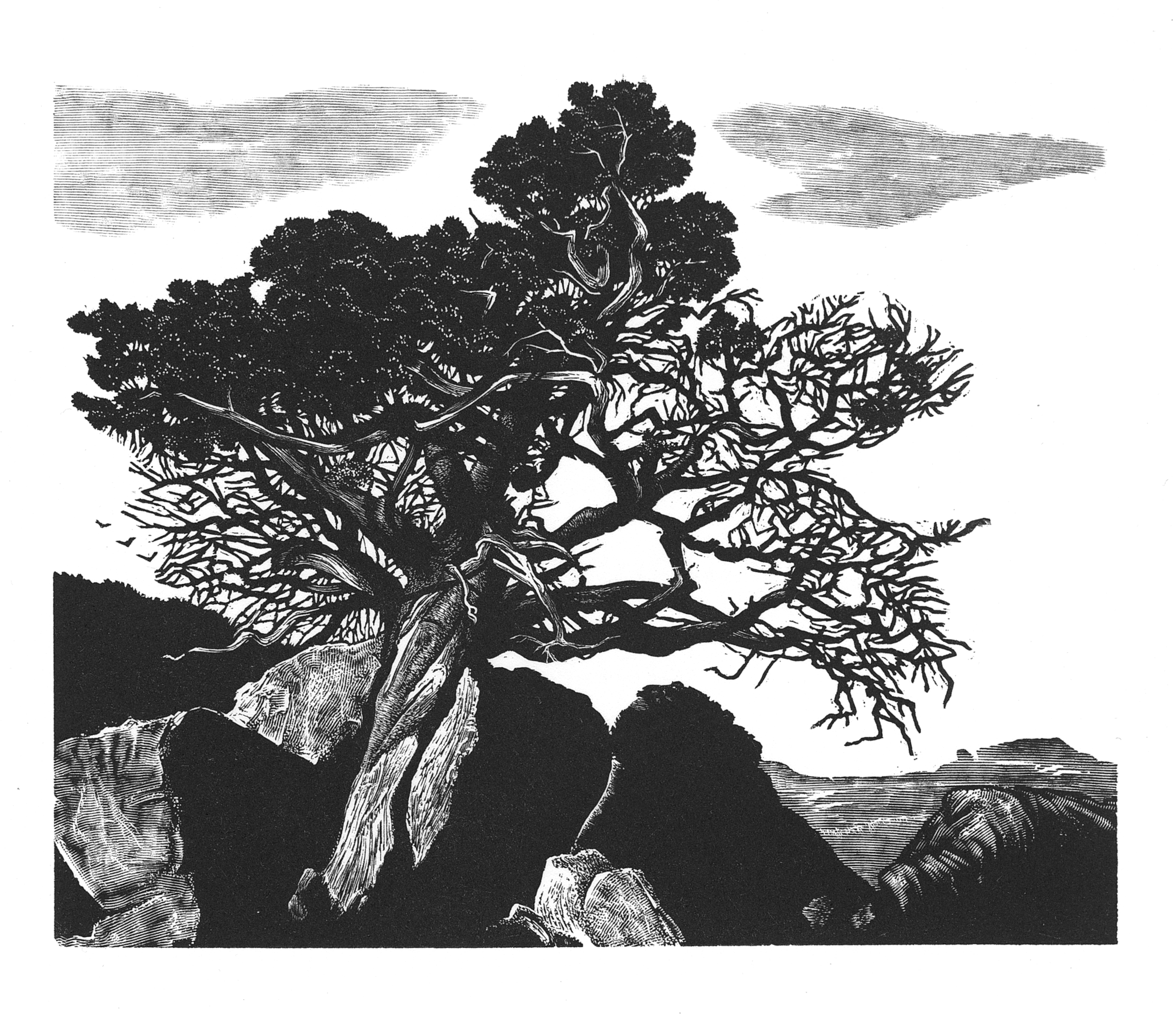
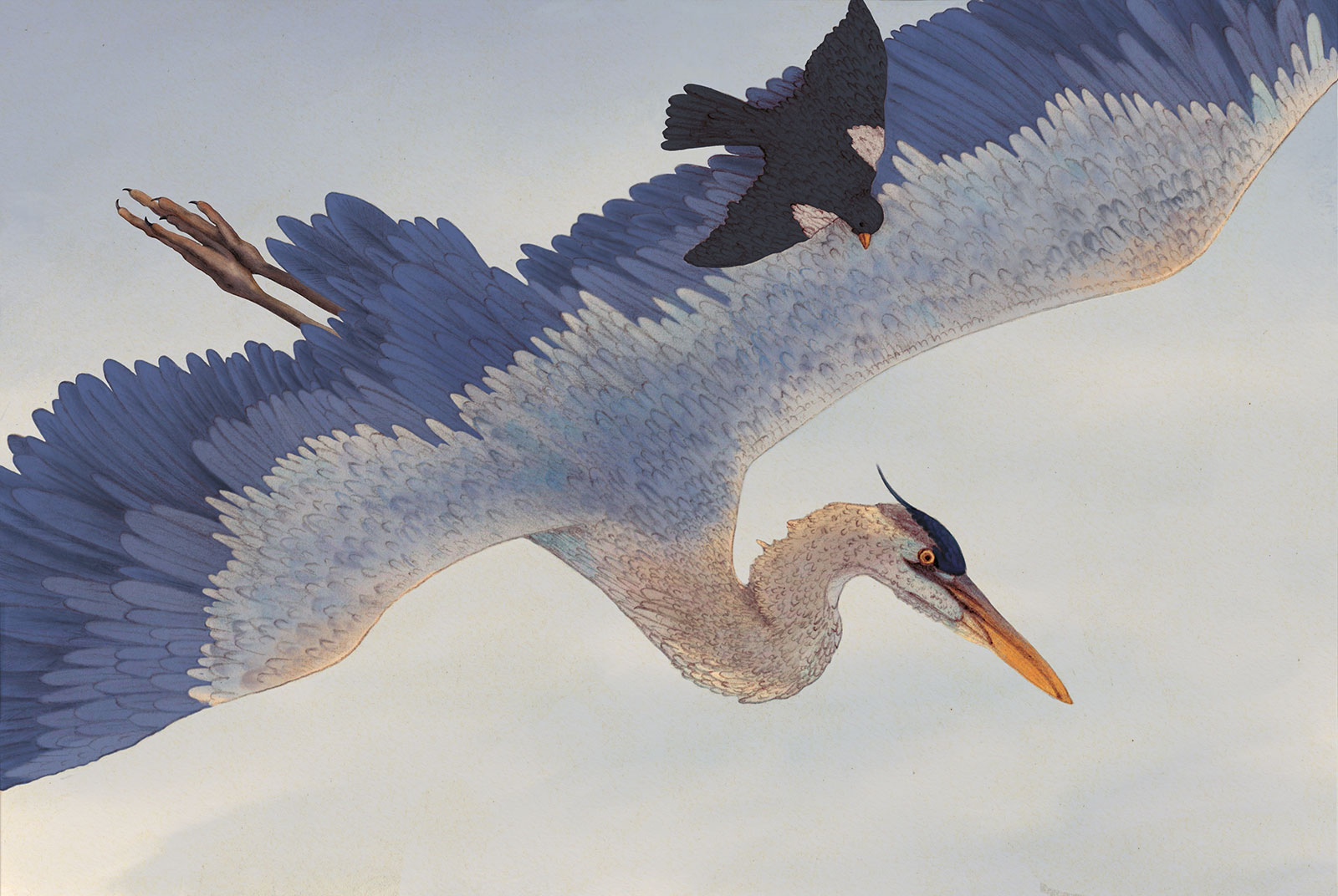
On this episode of the podcast, I speak with three scientists and authors, Valerie Trouet, Gretel Boswijk, and Malcolm Hughes, whose work appears in a new book from Greystone Press called In the Circle of Ancient Trees: Our Oldest Trees and the Stories They Tell. Valerie, Gretel, and Malcolm are dendrochronologists who tell us tree rings can reveal past climate, culture, and history—and offer ideas for future climate resilience. In the Circle of Ancient Trees collects their stories and others that combine the personal and scientific. The book was edited by Valerie Trouet and illustrated by London-based artist Blaze Cyan.
Thank you, Valerie, Gretel, and Malcolm, for joining me on the Terrain.org podcast. First, I'd like you to introduce yourselves and tell me a little bit about your background and why you're interested in dendroclimatology. Valerie, do you want to start?
Valerie
Sure, yeah. So my name is Valerie Trouet. I am a professor at the University of Arizona and I am a dendroclimatologist, which means that I use the rings and trees to study the climate of the past. I've always been interested in trees and in the climate. So I guess it was a natural combination of things that led to my becoming a tree ring scientist.
Tamara
Thank you. And Gretel, tell us a little bit about yourself.
Gretel Boswijk
Kia ora, so I'm Gretel Boswijk. I'm an associate professor at Waipapa Taumata Rau, the University of Auckland, and I'm based in the School of Environment here. I'm a dendrochronologist, slightly different to Valerie, so I came into tree ring science through doing archaeology in the UK. And then kind of focused in New Zealand on development of tree ring chronologies. I worked with a climatologist who was interested in reconstructing past climate, and particularly the El Nino southern oscillation. So that's my recent work.
Tamara
And finally, Malcolm, tell us about yourself and how you became interested in dendrochronology.
Malcolm
I'm Malcolm Hughes. Let's see, I have a long title. I'm Regents Professor Emeritus of Dendrochronology.
But basically, I'm a retired guy used to work in the tree ring lab. And I still do, but they don't pay me anymore. I think that's pretty fair, right, Valerie? I'm just upstairs from Valerie's office. And I started out life as an ecosystem ecologist in the 1960s in the northern UK.
So the early trees in my life, apart from the ones I climbed as a kid, were the scrubby oaks of the western fringes of the British Isles that it's now fashionable to call temperate rainforests because there's lichens growing all over them. And where your chances of finding anything that started much before the beginning of the 19th century was slim because folks for the whole of the last 10,000 years have done such a good job of exploiting the forest resources. So I was driven to look in buildings for older timber, but I'm not an archaeologist, I had to work with them.
From a forest ecology point of view, what got me interested in tree rings was that I became interested in processes taking place on the time scale of the lifespan of the trees, in this case in Western Europe, and quickly found I needed some kind of time setter. And that's where my interest in tree rings developed. Once I grabbed the idea of cross-dating, that quite different looking trees within a region could all have an extremely small or a mis-structured ring in the same year. That grabbed my curiosity and so I then went looking around the world for that.
Tamara
Thank you. Valerie, I want to start with you and a little background about your workplace. As a dendroclimatologist, you’re part of the Laboratory of Tree Ring Research at Arizona University. Can you tell us more about how the Lab was started, including a bit about its founder, Andrew Ellicott Douglass?
Valerie
Yes, gladly. I’ll gladly do so. The field of dendrochronology or tree ring research is about a century old, and so Andrew Ellicott Douglass, who originally was an astronomer, he's the one who in the early 20th century realized the potential of old living tree and what they record in their rings. And so as I mentioned, he was originally an astronomer. He moved to the University of Arizona originally to do astronomy. You know, we have clear skies here… he had always been interested in solar cycles and the amount and variability of the amount of energy that the sun sends towards Earth.
And so he came up with the idea that trees live for a long time, they depend on sunshine, so maybe trees record something about the energy coming from the sun in their rings. And this is how he started looking at the rings in old living trees here in Arizona and discovered all kinds of things, discovered that indeed you can record, the trees record a lot. It's less clear that they record solar cycles. It's still an ongoing field of research, but discovered that they record periods of drought in their ring patterns, that the patterns of trees growing in the same region are similar so that you can actually compare these patterns to each other and then also discovered that these patterns are preserved in wood of dead trees and for instance also archaeological wood. So that's when the early 20th century dendrochronology really experienced a boom once the archaeologists came on board and then the University of Arizona allowed Douglass to establish the Laboratory of Tree Ring Research in 1937 in the middle of the desert in Tucson, Arizona.
Tamara
And Valerie you tell an interesting story in the introduction about a tree that was special to you, although it wasn't an ancient tree, and prompted you to want to study trees. Do you have any other stories of individual trees that were important to you in your career path or your development?
Valerie
Sure, yeah. So I grew up in Belgium. That's where I did all of my education. Belgium is a very densely populated country. It has been very densely populated for a long time. So there's not many old trees left in Belgium. After I finished my PhD, my first job was to work in the Sierra Nevada mountains in California and to do field work up and down these mountains collecting cores. And one of the tree species that I sampled there were the incense cedars. I don't know if you know them, but they're beautiful trees. They smell phenomenal.
Also their wood smells phenomenal. So you bring it back to the lab, you start studying this wood that just your whole lab smells of incense cedar basically. And that's the first time that I, you know, started measuring rings and counted more than a thousand rings. And then it's like, it really sinks in like, oh wow, this is, you know, this is ancient material, especially when you're thinking of California.
We don't know much about what happened in California a thousand years ago because there's no, indigenous populations of California didn't have a tradition of writing things down. So there's no written records about what happened a thousand years ago climate-wise, history-wise in California. We only know spot-wise what happened there. So, holding these samples from an area that are witnesses of things that happened in a region where we don't know what happened there is very powerful.
Tamara
Gretel, did an encounter with an individual tree set you on your path to becoming a dendrochronologist?
Gretel
I can give two kind of answers to that. One is that I did my overseas experience. So in New Zealand, we go on what's called an OE. We'll leave New Zealand for a while, go and experience the world. And I ended up at university in the UK. And it was through studying archaeology that I was introduced to the Dendro Lab because I did my undergrad dissertation on a timber frame barn which I recorded and researched the history of and then did the dendro dating of with guidance from the Sheffield Dendro Lab. So that's the academic route.
But in terms of a particular tree, I grew up in a town called Nelson and I grew up in a very big house there and the grounds or what remained of the original estate had specimen trees on it. And one of those was a giant redwood, which my father had hung rope swings from the lower branches. And as those lower branches were really high up the tree by that time, it must have been getting on for 100 years old, the tree. So, fantastic for rope swings. But that tree, that redwood, I guess, was a feature of the property and somewhere where we played a lot. So, I guess like Valerie talking about her larch in the introduction to the book, the redwood tree is part of my childhood.
Tamara
Reading In the Circle of Ancient Trees we learn that trees have memories and they hold secrets and they tell stories. I love that you can extract so much not just factual information but cultural and historical information from what you see in the trees’ rings. Gretel, can you give me an example of some kind of history or story a tree has told you?
Gretel
Well, around the world, well, in parts of the world, dendrochronology has been valuable in archaeology as a way of establishing dates for when objects were made or sites were settled because you can get an absolute calendar date. So imagine in Britain, if you're looking at Roman London, then there was all this wood that was preserved along the waterfront. And so you can get actual calendar dates for when the trees were cut down and then from that you can work out when they were incorporated into the structure. So in, across Britain, across Europe, that's how dendrochronology can be applied in archaeology. In New Zealand we have a much shorter history, so people didn't arrive until about 800 years ago.
And then we're trying to use dendrochronology as a way to date Māori artifacts, but it's quite challenging for different reasons. The species that get used, the longevity of those trees, and also cultural sensitivities around whether it's actually appropriate to undertake scientific analysis on objects that are considered taonga or treasures. But we do, have used triggering analysis in our buildings from the 1800s and early 1900s to help understand their history. So it can be quite powerful in that sense, giving us absolute dates.
Tamara
And you also write about the trees’ role in history. Can you tell me a little bit more about how that influenced how you studied them?
Gretel
Yes, I wrote a little bit in the chapter about that because in working with the kauri wood, I've tried to learn a lot more about its social history.
And kauri in Māori philosophy has a very important place. It is an entity that is connected to the gods, the god of the forest, who's called Tāne. And in Māori, the Māori creation myth, we have Papatūānuku who is the Earth Mother and Rangi who is the Sky Father and they loved each other so much that they clung together and their children lived between them in darkness and then the children decided they had to separate their parents to bring light into the world and it was Tāne who in the northern version of the myth grew like a kauri tree to separate the earth and the sky. So you can see that it is embedded in the Northern Māori philosophy as an important part of the forest. Tāne is the god of the forest, the birds, and people.
We do tend to thank the trees and if we are going on site here as well and we are working. In the past we've had representatives from local Māori tribes coming with us. So we will also offer a prayer before we start what's called a karakia to acknowledge the trees and thank them also. So may sound odd to do that, but actually it's an important part of the process, I think here now.
And then Europeans have a different attitude because when New Zealand was colonized by Europeans in the 1800s, they both admired the forests and the grandeur of the trees, but also had that pragmatic approach that these big trees could provide you with a high volume of timber. And that timber was necessary for building the new colony, and it also generated revenue through export.
So I work with a colleague and the UK in Wales and he recently bought doors made of kauri wood from a house, early 20th century house that we're working on. So that's a physical manifestation, that's physical evidence of the timber trade, kauri being exported around to Britain. And it's the same story that happened across North America as well, the exploitation of our forests.
Today we have a new relationship to kauri and that it is to be protected. So it is, because it's such a grand tree, it's been much reduced in the extent of kauri forest. So it's conserved and it is an iconic tree.
There are a lot of trees coming up on land that was cleared for farming and is now going back into forest. And people are also planting kauri trees all the length of New Zealand. So, as far as southern South Island, which is where it doesn't grow naturally, but people are planting up their land with it for carbon farming.
Tamara
And, Malcolm, can you share a fascinating story of culture or history that you've learned from reading tree rings?
Malcolm
Well, on the dendrochronological side, there was a group in Belfast who were building a very long oak chronology primarily from bog oaks and buildings in Northern Ireland covering seven thousand two hundred and seventy-two years, up to whenever that was,1980, for the purpose of providing a second independent calibration of radiocarbon timescale. The other one was done using bristlecone pine that I wrote about in the chapter.
And when we were building those things and sometimes my Belfast colleagues had to come across the Irish Sea to bridge a gap, for example, right around AD-BC, the so-called Roman Gap. And then there was another one, a phenomenon right around 1300 to 1330. So you go to the city of Chester, which I get back to whenever I go to see a football game in Liverpool, and there are these wonderful Merchants Palaces hidden behind the 19th century shopfronts. And they're of the scale of some of the palaces in Venice. They'd be divided up three dimensionally. Some of them were built on stone scavenged from Roman ruins, because it was a Roman city, and then built up on it. And what we discovered when we could get into the basement levels of those, for example, the Chester office of Sotheby's, the auctioneers, they were 12 by 12s. Oak, incredibly narrow rings, slow grown, that is to say prime, straight grown, very strong oak. Two aspects struck me. One is that they were squared off very nicely, so they wouldn't, and in fact had some decorative carving on them. But on the top, where you couldn't see them, they hadn't even taken the bark off. So this is wonderful piece of contractors stiffing the customer, right? But for us it was wonderful because that meant we had sapwood and bark, so we got the outermost year. And that just tickled my fancy. And then you go into buildings built in the 100, 200 years after that in places like Chester and it's all nasty, scrubby, fast-grown oak. They had, until the plague, they had decimated the timber they could easily get. And it's in a place where you can still walk and shop and eat and drink, but you can look back whatever that is, almost 700 years now very precisely.
Tamara
You’re listening to the Terrain.org podcast. In this episode, I’m talking with Valerie Trouet, Gretel Boswijk, and Malcolm Hughes about their work as dendrochronologists and the stories that tree rings tell us about our past and maybe our future. Their work is collected in a new book, In the Circle of Ancient Trees.
Tamara
Gretel, you wrote about difficulties you sometimes encounter while analyzing tree rings. Can you talk about those obstacles and how you overcome them?
Gretel
Sure. So I work on New Zealand Kaori Agathis australis, which is a really big tree. So we can get trees that are more than three meters across in diameter, some of the big forest giants. Most of the wood that we have looked at is more in the lines of between one and two meters in diameter.
But when you're a really big tree, you don't necessarily put on a growth ring all the way around your circumference in a year if something's happened up on one side of the tree. So we get what are called locally absent rings. So imagine an incomplete circle. It's grown on one side of the tree but not the other. So that's one of the challenges that we faced when we were chronology-building is that you need to measure the ring widths from the tree, but you need to have every single ring that the tree has laid down accounted for. And we address that by measuring multiple radii from a cross section, which enables us to compare the pattern from one side of a tree to the other side of the tree and ensure that we do have all those growth rings. We don't have any that are present on one side but not present on the other. We can then account for those gaps. And then we can cross-match between trees to ensure that our record is absolutely reliable. So that's one issue which I talked about, these locally absent rings.
And the other issue that can occur is that sometimes during the growing season, the tree may get a signal to shut down. So conditions change abruptly. Maybe imagine it's a really cold snap and the tree might think, it's time for me to start to shut down. So you'll get a line, a boundary forming that looks like the very final growth cells that the tree would put on during the season. But then conditions change and it carries on growing. So you can get this apparent boundary line. So we call these a false ring.
If we trace the ring around the tree, so if we've got a big enough sample that we can see a long length of the ring and its curve, we can sometimes see that these boundary lines disappear completely and they don't show up on other trees, so they are tree specific. So for kauri experience that is, we term that a false ring. So again the process of cross matching and being very careful and checking means that we can pick up these potential errors and then ensure that our record is reliable. Because if I'm building a tree ring for knoweldging and then giving it to a dendroclimatologist like Valerie, it has to be correct for her to be able to draw out the climate story from that.
Tamara
And I imagine you're using a lot of computerized tools to make the analysis. It can't be like the early days when you sit with your fingernail and count rings, or maybe it still is? I don't know.
Valerie
It's typically a mix. I still like to look at the wood and smell it, and it depends a little bit on the purpose of what your, the goal aim of your study. What Gretel was saying, of course, if you want to reconstruct the climate, if you want to have an indication of what drought was like every year of the past thousand years, you need to have a measurement of how wide the ring was each of these years. And those measurements, the measuring is computerized.
But if you're an experienced dendrochronologist, if you're looking for the date of when a tree died rather than measuring each and every ring, you can do that visually and it goes much faster. So there's these pointer years, for instance in California where I was working for a long time, I knew all the pointer years. I knew 1796 is the driest year on record, and so I could pick up a piece of wood, look for the most narrow ring and most likely that was going to be 1796. You can, depends a little bit on the aim of your study, but you're absolutely right. Nowadays a lot of it is computerized. Obviously there's... we don't talk much about all the statistics involved because it's pretty boring for a broad audience, but there is a lot of statistics involved. And that is all. We don't do that, but we don't calculate all of that by hand. So that's of course computerized. And then nowadays, there's so much progress in computer imagery and taking images and cameras, in storing images, in analyzing that, we often work from images, take images of the wood and then work from there to do our measurements.
Tamara
Thank you. I'm interested to know in particular, because this seems like a focus of the book, how details about climate revealed by tree rings can help us preserve the trees and their environments, or inform us about resilience and healthy land use. Some chapters in the book, for example, let us know that dendroclimatology can guide us as we attempt to rewild a species or in planning future sustainable logging operations.
Valerie
In general with tree rings, we look, we study the climate of the past. We cannot project what the climate of the future will look like, but with our very precise annual data, we give the climate modelers who do. So to look at the future of our climate, you use climate models. The models project what our climate is going to be like. The more data these models are based on, the better the projections of what our future climate, the better they can predict what our future climate will look like. And so if they only use... data measured by satellites or by instruments, by thermometers, for instance. You have satellites go back to 1980, best case, instruments, thermometers, worldwide, beginning of the 20th century. So with only instruments, the climate models don't have any idea of what the climate looked like before the industrial revolution, before we started messing with it basically. So with our wealth of tree ring data and tree ring based climate reconstructions, we can greatly improve the climate models that are used to look at the future of our climate. So we can make those climate models, we can help make them much more reliable and get a better idea of what all is ahead of us. That's very generally speaking.
I think one concrete example that's a little less climate focused, but you also mentioned land use and resilience, is we can also use rings and trees to study fire history. And so, that is some of the work I've done in California. And of course, very many people have done this kind of work. We can look at how wildfires, how fire regimes functioned in the past over past centuries. And that will help us deal with the current destructive wildfires that we're dealing with in the American West, for instance. So that will, that teaches us how it's been in the past, how past societies have dealt with it and so forth.
Tamara
Valerie, I was also struck reading In the Circle of Ancient Trees by how many accounts there are of scientists being extremely excited to discover this ancient tree, this very old being, in a place where probably other humans have just passed it by, not recognizing that it’s anything special. Can you tell me about your experiences with that?
Valerie
Yes, I think for me the most striking example is when we went to go and do field work in Greece and in Bulgaria and we worked on the Bosnian pines there. And Greece is one of the oldest civilizations worldwide and definitely in Europe. So, you know, people have been living in Greece for literally millennia. People have been using wood and cutting down trees there for millennia. So this was not necessarily a place where we expected to find very old trees.
It's also a cool story of how this went about. A colleague of mine, Paul Krusich, he was reading a PhD of a German person who was not a dendrochronologist but who had studied these Bosnian pines and he took some photos that he included in his PhD thesis. So Paul was looking at these photos and said, these trees look very, very old. So this is how he took me on board. He took a couple of other colleagues on board. We all went to Greece to where those photos were taken, and lo and behold we saw ancient trees. We cored them. Of course, you can tell you can tell that trees are old from looking at them but you cannot tell just how old they are. It's not until you bring the cores back to the lab, you do the process of cross dating, and you count the rings that you actually know how old the trees are. And there in the mountains in Greece Pindus Mountains is where we found the oldest known living tree in Europe, one of those Bosnian pines. We named him Adonis for the god of beauty, the Greek god of beauty. And this was in 2015 when we found him and then he was 1,075 years old. Yeah, that's magic.
Tamara
Yeah, absolutely. I'm curious to know how this book came about. Where did the idea come from and how did you decide what to include and bring the authors together?
Valerie
Thanks for asking that question. It was the publisher, Riverside, a British publisher who approached me. I'd written a book that was published in 2020, Tree Story, about dendrochronology. That was just my own story. And so ever since, I have been asked the question quite a few times, like, you know, when are you going to write another book? When are you going to write another book? But I'm like, everything I know, I wrote in Tree Story.
Then this question came from Riverside and they had the vision of creating a book about ten iconic trees and they're the ones who came up with the idea to also involve a wood engraver, Blaze Cyan, who made wood engravings for each of the specific tree species.
That was a very appealing idea to me, but then I convinced them then rather talking about specific trees I wanted to talk about ten tree species and I really wanted it to be tree ring focused. They agree to all of that and so then my first task was to make a list of 10 iconic tree species in my field that all told their own story and then think of the people that could tell those stories well. I convinced those people to each write a chapter for the book. in my wildest dreams I could not have dreamt up of what a beautiful combination of scientists, of stories, of tree species would have come together in this book. I am really very, very happy and grateful, of course, with how this turned out.
Tamara
Oh yeah. I wonder if you were surprised by any of the material or what people brought out about the trees you chose.
Valerie
Very much so. What I think in general I was most surprised by is that these are all scientists. We are all scientists. The majority told me “I've never written for a broad audience before; this is going to be a challenge.” And then how beautifully they took on this challenge and what they made out of it and they've done professional memoirs. They’re really not like this is what the tree tells us. They're really the intertwined stories of people's lives and how they became a scientist and but also what then their science through these iconic tree species has learned us. One of the things that came out of Tree Story, my first book, that, or the feedback I got most often is that people, broad audience, readers, really appreciate learning about the scientists, not just the science. Learning about what it's like to be a scientist. We forget that not everyone's a scientist. Not everyone goes into the field and cores trees, because everyone we talk to does that. So I'm super happy and Gretel's... chapter is a beautiful example of the intertwining of personal stories and scientific stories.
Tamara
Yeah, it is. As you say, the authors weave their experiences with the facts. We feel the effort of coring trees and hiking to remote locations and sometimes, even, the confusion over what the tree rings are trying to tell us. But I wouldn’t say that it ever becomes monotonous or tedious. Although I imagine there's a lot about your professions that tends to be tedious, t hat doesn't come through in this book.
So, Gretel, I have a question for you, which is, I wonder why you think this book is important now.
Gretel
I think it's important now in terms of helping people understand our world in terms of the trees that are in the world, their longevity, their capacity to endure. I think that's valuable for us at the moment. And also showing the human side of science as well. Because I think scientists can sometimes get a bad rap or be picked apart or people challenge what they do. So the other thing that I really value about this book is that you are reaching an audience that as an academic you don't normally reach. So I write academic papers, Valerie, Malcolm do the same and they go out to a specific audience. I love the fact that this book was written for people in Britain and North America here in New Zealand, you know, that will not necessarily know anything about this discipline, but they'll open the pages and go on a journey. And at the end of it, they'll have learned something about these different trees.
I've just come off summer break and I started my days with a pot of tea and a cup in bed and I read a chapter a morning and I loved it. It just... took me on the travel. I went to Chile, I learned about the Bosnian pines, which I hadn't known about. I re-read about the iconic trees, the bristlecones, the redwoods, the oaks. You know, I'm familiar with oaks from my early training. But even for me, it was an exciting journey. So I think that's valuable in terms of reaching people who aren't going to be reading academic papers and showing them the beauty of these trees too.
Tamara
Yes, exactly. I love that. Malcolm, how would you answer that question? Why is a book like this necessary or important now?
Malcolm
I would largely echo what Gretel said. In general, we're always at risk of becoming completely absorbed in our own little world and people with whom we share assumptions. Even those of us who've been teaching for a very long time, there again there's a sort of implied power relationship in at least a traditional classroom that you can hide behind. Whereas sitting down to write for you don't know who and you don't know what they know or don't know is a fundamentally different process.
The last time I think I was challenged with doing that and I'm probably one of those that Valerie was referring to, was a short piece in new scientist in 1976, and that was a hungrier Malcolm than now. And since then it's been, you know, each year several scientific papers, some of them read by vanishingly small audiences, cited by more than have read them and then some others that have had an impact. The other side of that is that yes, seeing science as a human activity done by real people is extremely important.
People know that I've been on the receiving end of ideological and political attack from extremely powerful people, some of whom now run the US government, particularly the EPA, Department of Energy, back 10, 20 years ago. And it's really important to see that science is, first of all, it's a process that's repetitive. You don't just say, I've solved it, it's there, right? You know, shine up my medals and move on. You're continually trying to do better. You worry about whether or not you got it right. But also that it's mixed up with all kinds of other human responses like hope and excitement and disappointment and so on. I think that's very valuable, just of itself.
Tamara
Thank you. And now I have to know who was attacking you and why.
Malcolm
Oh, ExxonMobil, Shell… I'm one of the authors of the so-called hockey stick curve. It's a northern hemisphere temperature record, first of all for the last 600 and then for the last thousand years, built on tree rings, historical records, corals, laminated sediments from around the world, published in 98 and 99.
And powerful politicians in the US Congress and elsewhere who try to professionally and personally discredit us. I can quote an Elton John song, We're Still Standing. And...By continuing to check, did we get it right? How can it be done better? That's the nature of the process. And it's got to be seen that these aren't for higher manipulators of cherry-picked pieces of evidence. These are people who show they're working, share their data, open their records because that's how it's done and that's what makes it exciting.
Tamara
I love that. Thanks, Malcolm. We’re nearing the end of our time together, so I want to ask, is there anything we haven't talked about that you want to make sure listeners understand about your work or the book in the circle of ancient trees?
Malcolm
I'll just put in one word which I use, persistence. One way or another, all of these trees, even though they're surviving in incredibly different environments, the material, because it's dead, but also because of its makeup or because of the dynamics of the populations, allow them to hang around for a very long time. And in particular, some of the oldest trees are not very big. Although some of the biggest trees are very old. And it's because they have different, I don't want to use an anthropomorphic term, evolution has given them different ways of persisting. And that's a...itself a really interesting property that even goes as far as engineers and wood engineering to understand, how can it hang around in the case of things like bristlecones or the junipers in Central Asia or some others around the world. If the tree lives four or five thousand years and the wood can still hang around another several thousand, it's persistent.
Tamara
Yeah, that struck me while reading the book too, how many of these oldest trees are surviving on rocky slopes with thin soil or in cold, windy situations. It really is remarkable.
Malcolm
Well, nobody else wants to be there. So there's not much to burn. That's part of the story. But then there are those like Huon Pine, which I don't think is in this book, right? But there are others around the world like kauri and alerce in Chile and the coastal and the Sequoia in California. They're not in... very well, at least the Sequoia and Bristlecone, Sequoia is not in very wet conditions, but it's not in a desert either. It's green. So they've got other techniques for persisting.
Valerie
I think I mentioned it as an aside, but I do think an important part of the book is also the artwork. The publisher really did a beautiful, beautiful job. The artwork really elevates the book to a next level, I think. And it's the juxtaposition of the science and the art together that makes it very powerful.
Tamara
It is and it's published or printed with such high-quality paper. It's a weighty book, both physically and figuratively. Gretel did you want to add to that?
Gretel
I was just going to say that's an aspect I really liked about the book is that it's a piece that you want to hold. The paper feels really lovely when you touch it. So it is on that coffee table book experience as well. So you can have it out. But it got my mother's seal of approval because I gave her a copy and she messaged me to say that it was just utterly beautiful loved it, the paper, the colors, the artwork and the stories within. So kudos to Kelly. Yes.
Tamara
Yeah, absolutely. Well, thank you, Malcolm, Gretel, and Valerie for your time today. It's been a real pleasure learning from you and talking with you.
Valerie
Thank you so much for visit and for bringing us together into what you need.
Malcolm
Thank you.
Gretel
Thank you very much.
Tamara
Thank you for listening to the Terrain.org podcast. Today’s episode featured contributors to In the Circle of Ancient Trees: Our Oldest Trees and the Stories They Tell, including the editor, Valerie Trouet, and dendrochronologists Gretel Boswijk and Malcolm Hughes.
I’m host and producer, Tamara Dean.
The music is “Liftoff” by Nature Connection.
You can listen to previous podcast episodes—and discover the work of many fascinating authors and artists—at Terrain.org. Content from all of the magazine’s issues is freely available online.